
Whether you’re aiming to enhance security or streamline productivity, the ability to manage which applications can or cannot run on enrolled Devices is crucial.
This article dives into the two key approaches: app blocking and app allowing through Applivery.
App blocking involves the selective restriction of certain applications from executing on managed Devices. This can be particularly useful to mitigate security risks. By creating a block list, administrators can prevent specified Apps from launching, thereby safeguarding sensitive data.
Conversely, app allowing, often referred to as whitelisting, centers around permitting only a predefined list of applications to operate on enrolled Devices. This method is employed when organizations seek to optimize productivity by ensuring users have access to only the essential tools. By creating an App whitelist, administrators can ensure that only approved applications are available for use, minimizing potential security vulnerabilities.
Allow a list of Apps for iOS Devices
Once in the Applivery Dashboard, go to any of your Policies (1). From the left side menu, go to Apps (2) and click the + Add App button (3).
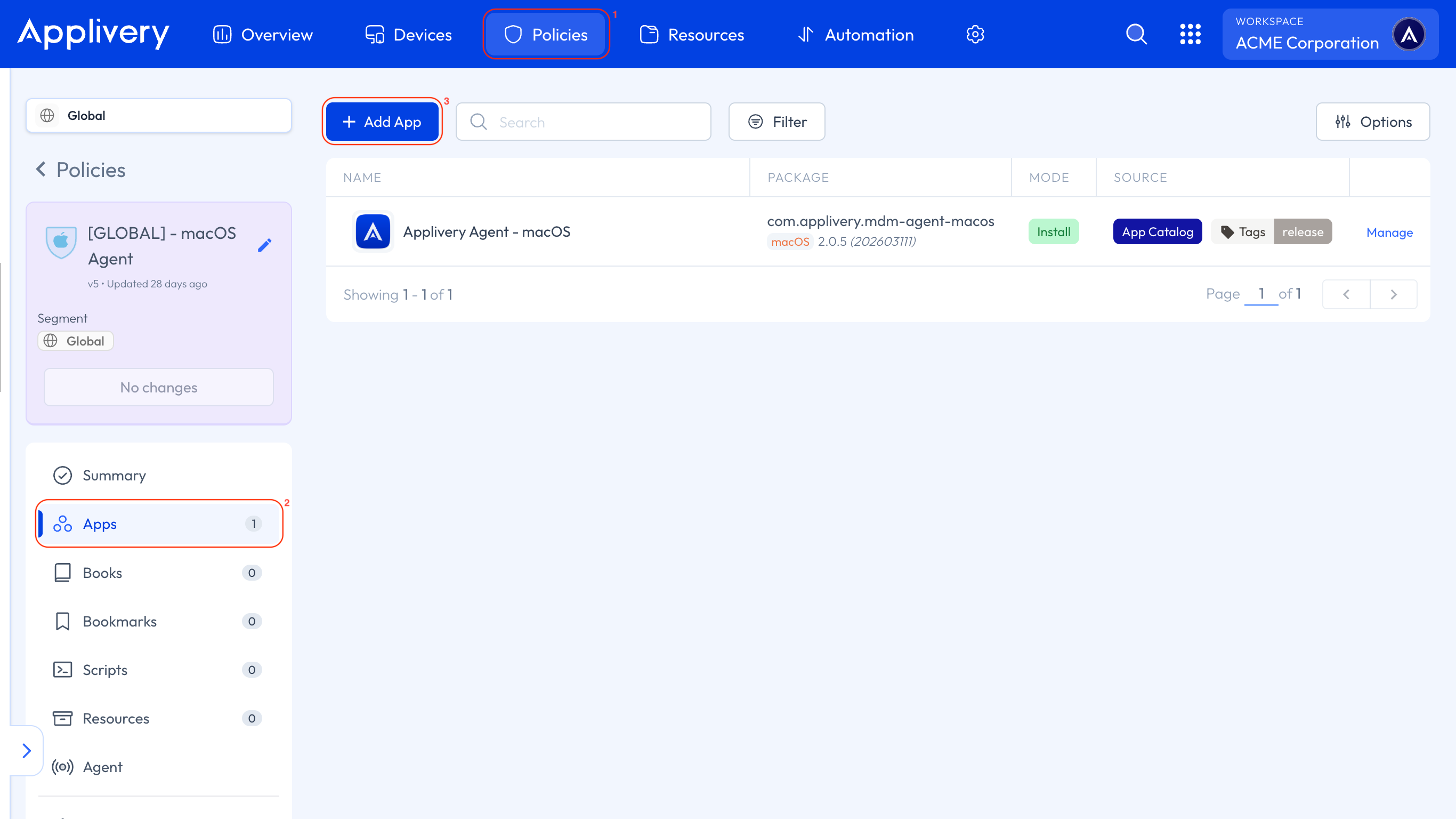
Through any of the available tabs (App Store, Applivery), you can search for and add the applications that will be part of your whitelist of applications.
It is necessary to specify whether the application is intended for iOS or macOS. Additionally, you will need to indicate if the App holds a VPP license (more details available here).
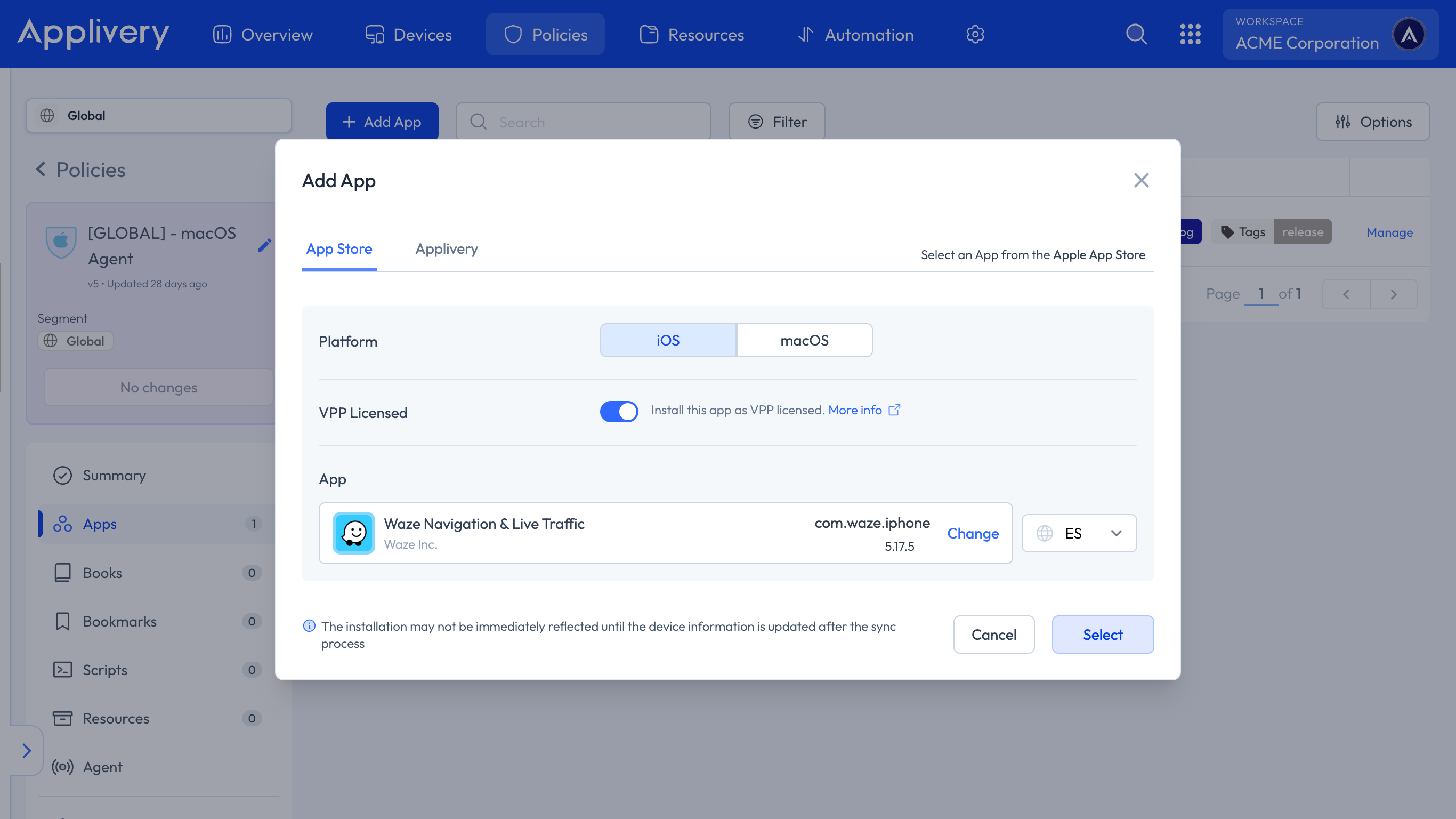
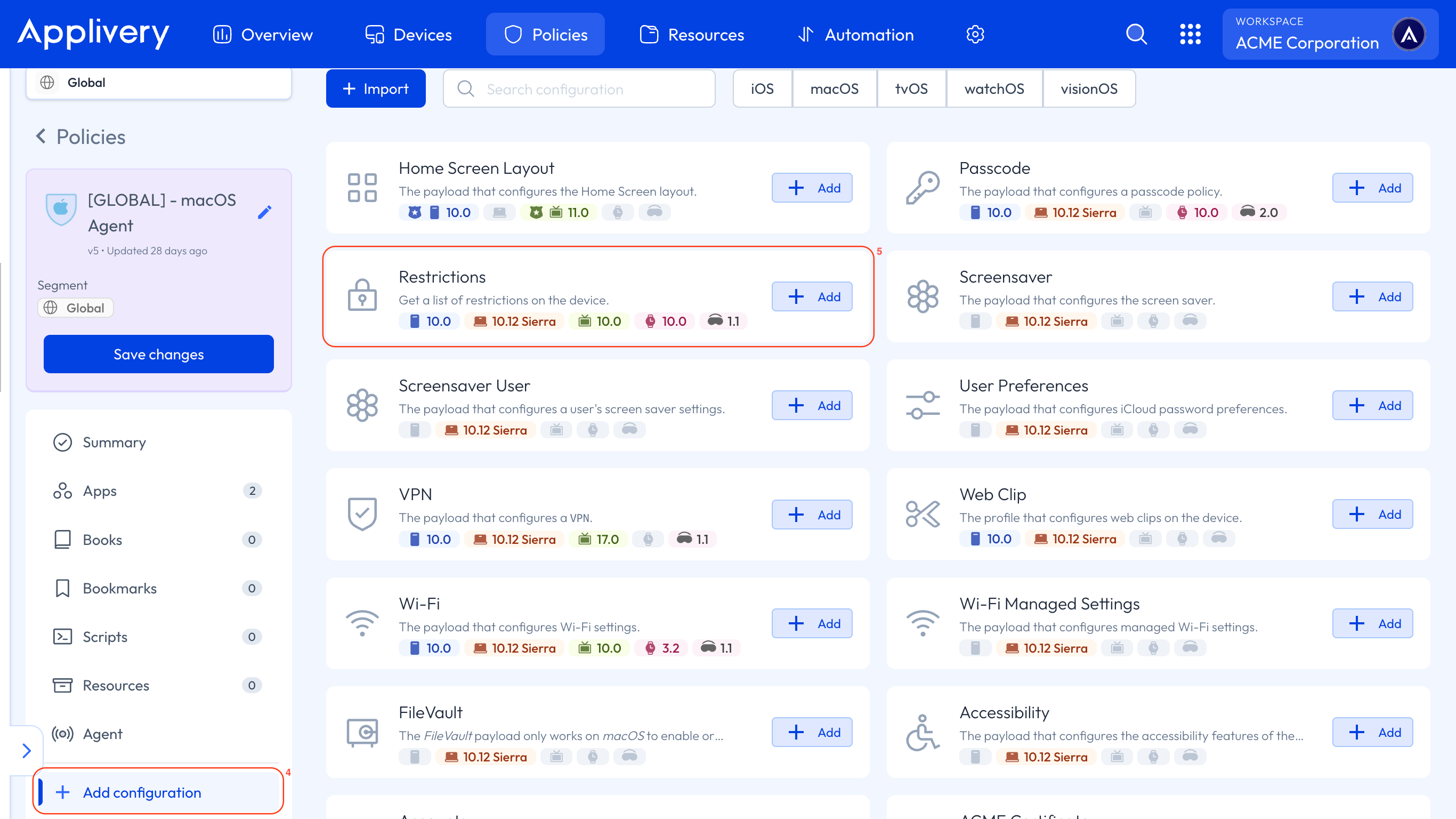
You will need to configure the Allow / Block List setting. From the left-hand menu, select + Add configuration (4), choose Restrictions (5), and navigate to the Allow / Block List (6) section.
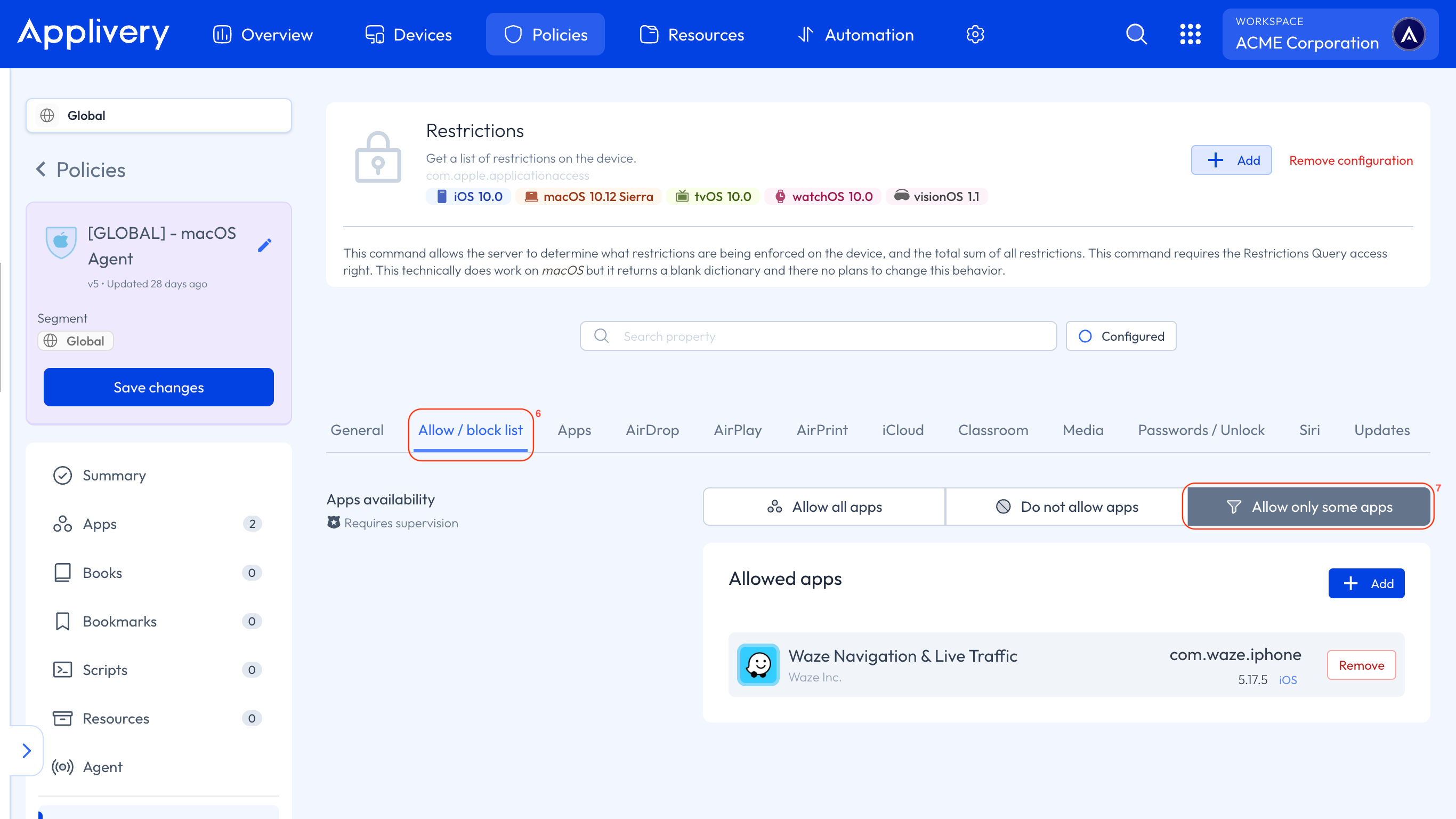
Then, select Allow only some Apps (7) and add the applications that will be included in this list.
Block a list of Apps for iOS Devices
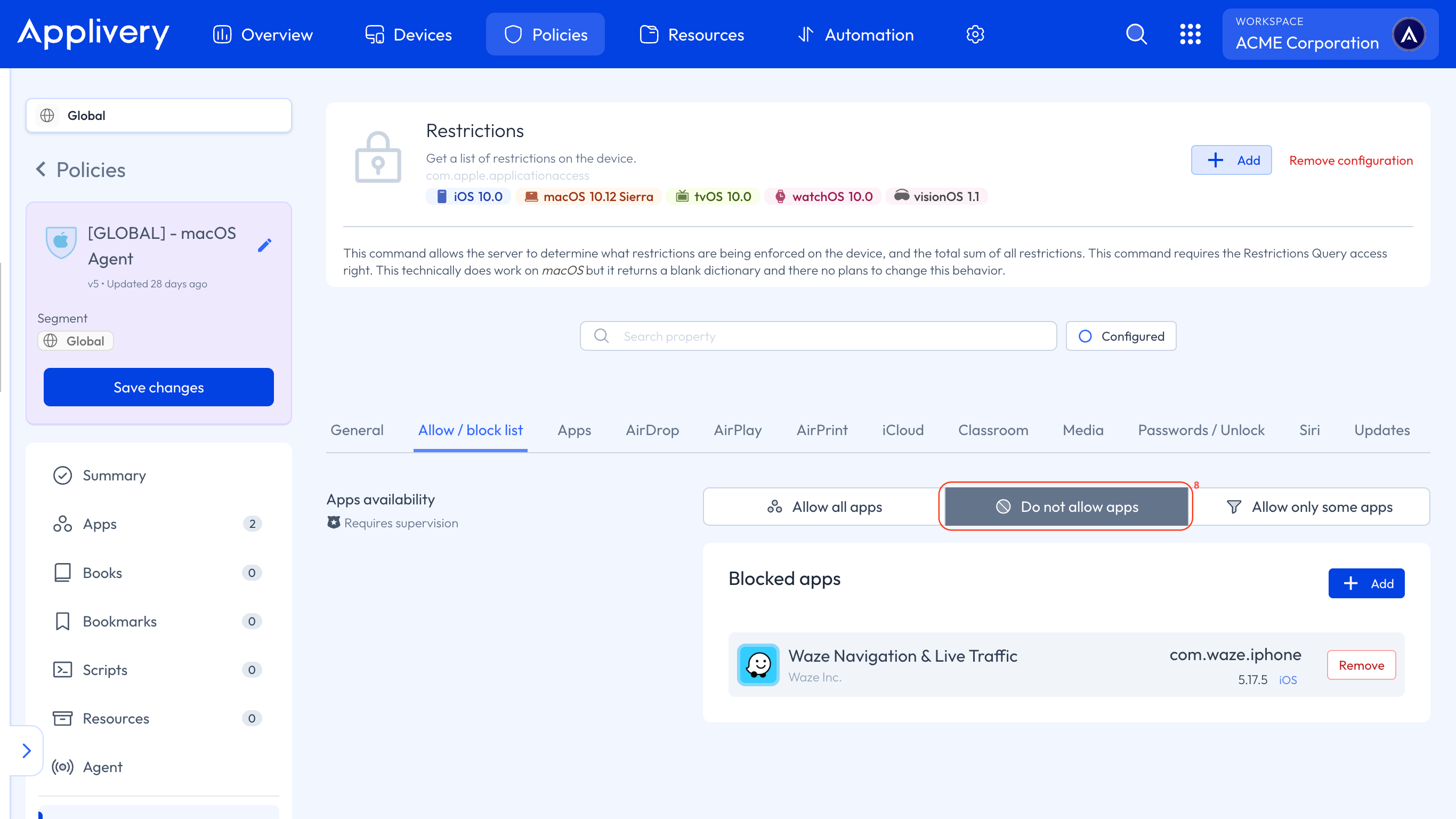
Just like if you were configuring a whitelist of Apps, now you will need to select the Do not allow Apps (8) option. The App will be blocked, and users won’t be able to install it.
Block a list of Apps for macOS Devices
Certain system Apps, such as Finder and Siri, automatically relaunch and stay open on macOS. Since these Apps attempt to open continuously, blocking them results in endless blocked-access pop-ups on the Device.
To block applications on macOS Devices, the Applivery MDM must be enabled at the Policy level.
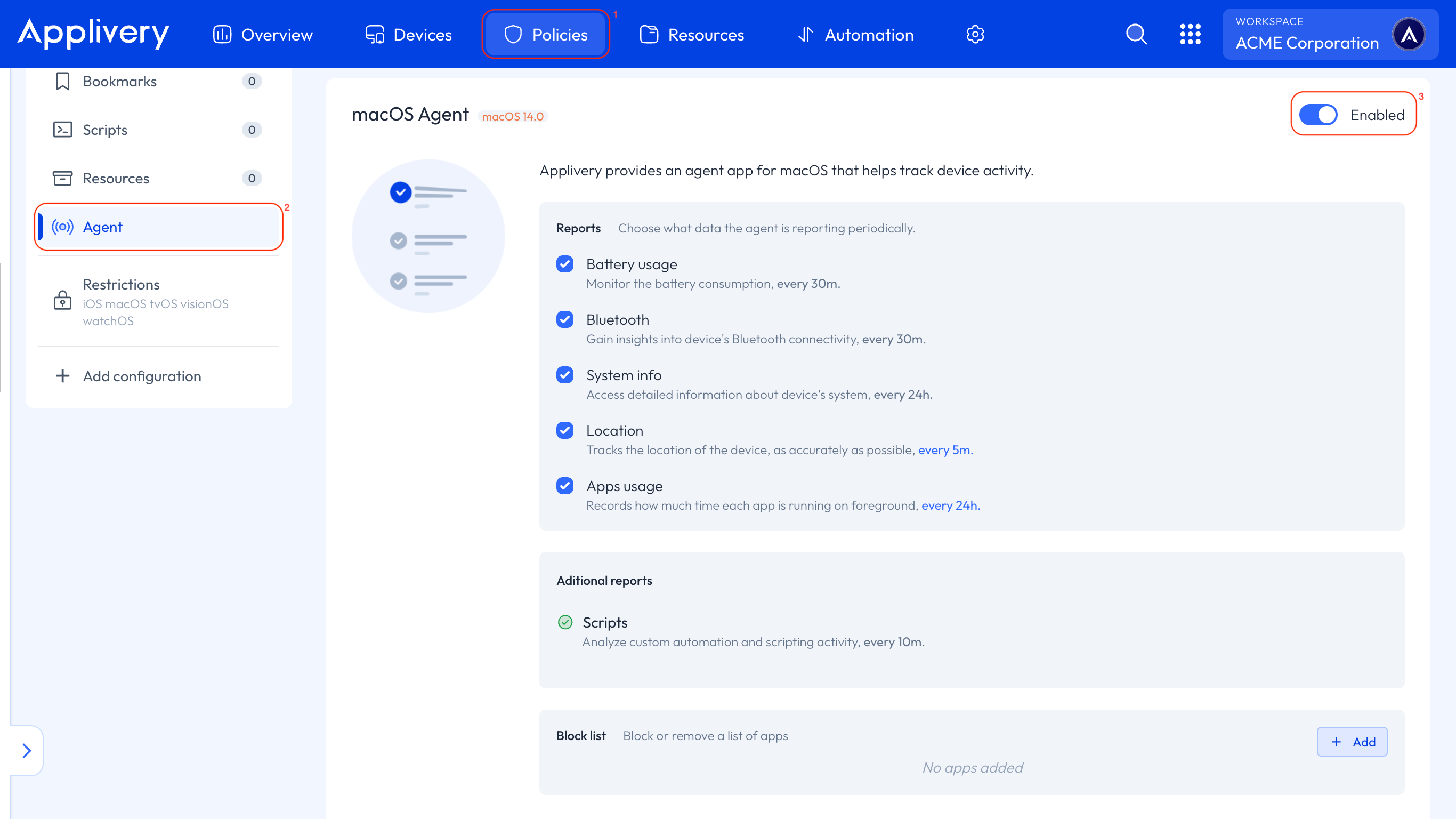
Once in the Applivery Dashboard, go to any of your Policies (1). From the left side menu, go to the Agent (2) section and Enable it (3).
You’ll then be able to create a list of Apps by clicking the + Add button.
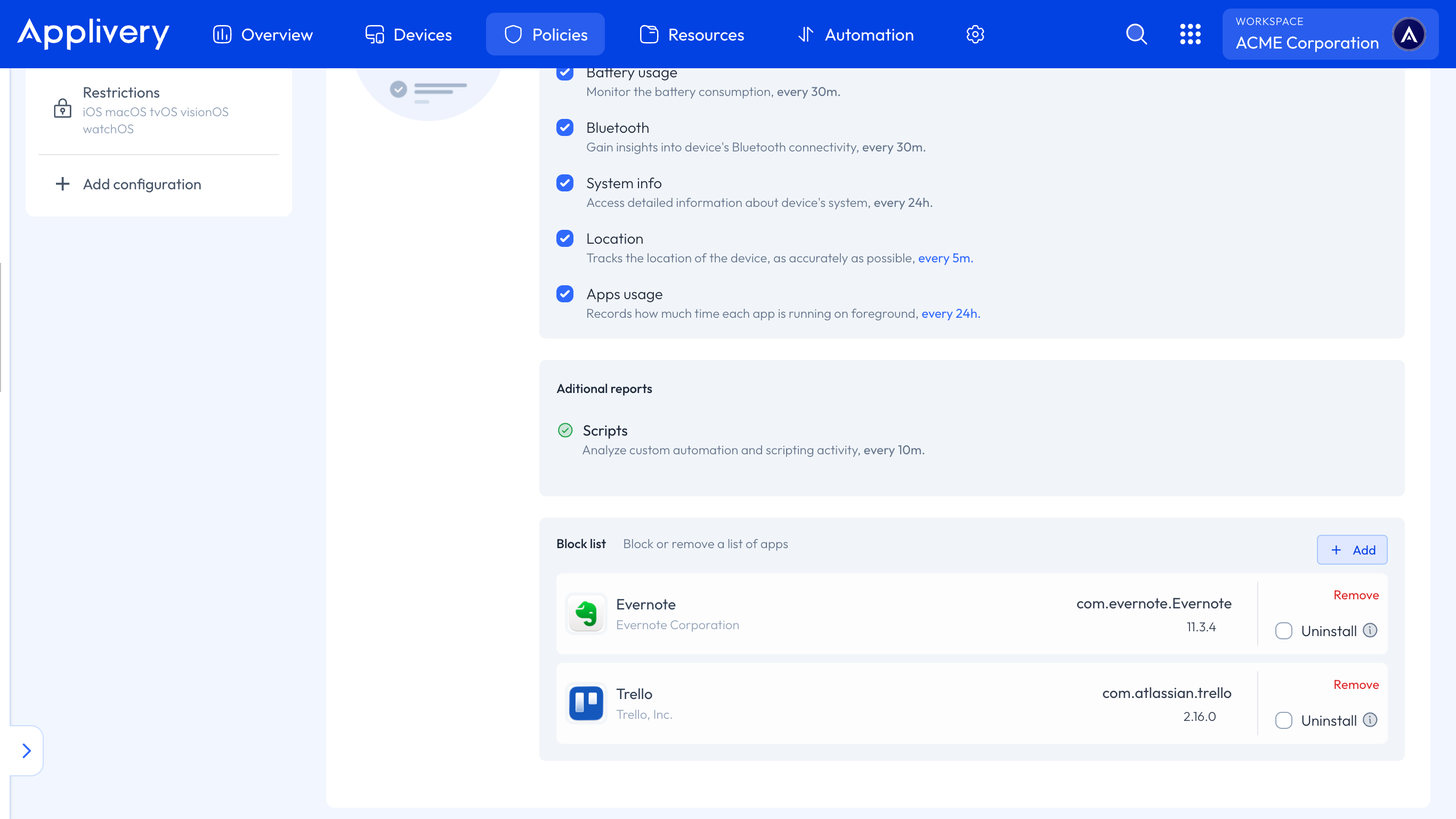
Many preinstalled Apps are located on the signed system volume, making them impossible to delete. However, you can remove them from the Dock using a Policy, and if a user tries to open one, an alert will notify them that the App cannot be launched.