# Check Point Harmony Mobile Integration
> Integrate Check Point Harmony Mobile with Applivery for advanced mobile threat defense on Android and Apple Devices.
Source: https://docs.applivery.com/en/device-management/integrations/security/checkpoint-harmony-mobile-integration/ • Last updated: 2026-06-08
**Key topics:** Applivery integration, Check Point Harmony Mobile configuration, Android device setup, iOS device setup, Mobile threat defense, Check Point Harmony Mobile, Applivery, Android Enterprise, Harmony Mobile Protection App
---
**TL;DR:** Integrate Check Point Harmony Mobile with Applivery to enhance mobile security through real-time threat detection and centralized policy management.
[CheckPoint Harmony Mobile](https://www.checkpoint.com/harmony/mobile-security/) integrates seamlessly with Applivery to deliver advanced mobile threat defense and comprehensive Device security. This solution offers real-time malware detection, phishing protection, and network security monitoring, ensuring that corporate Devices are continuously safeguarded from emerging threats.
With Harmony Mobile and Applivery integration, administrators gain a unified console to monitor Device risk levels, categorize Devices dynamically into groups based on threat severity, and apply tailored security Policies accordingly. The integration supports Zero-touch deployment, enabling the automatic installation and activation of the Harmony Mobile Protect App across large fleets without user intervention.
## In the Applivery Dashboard
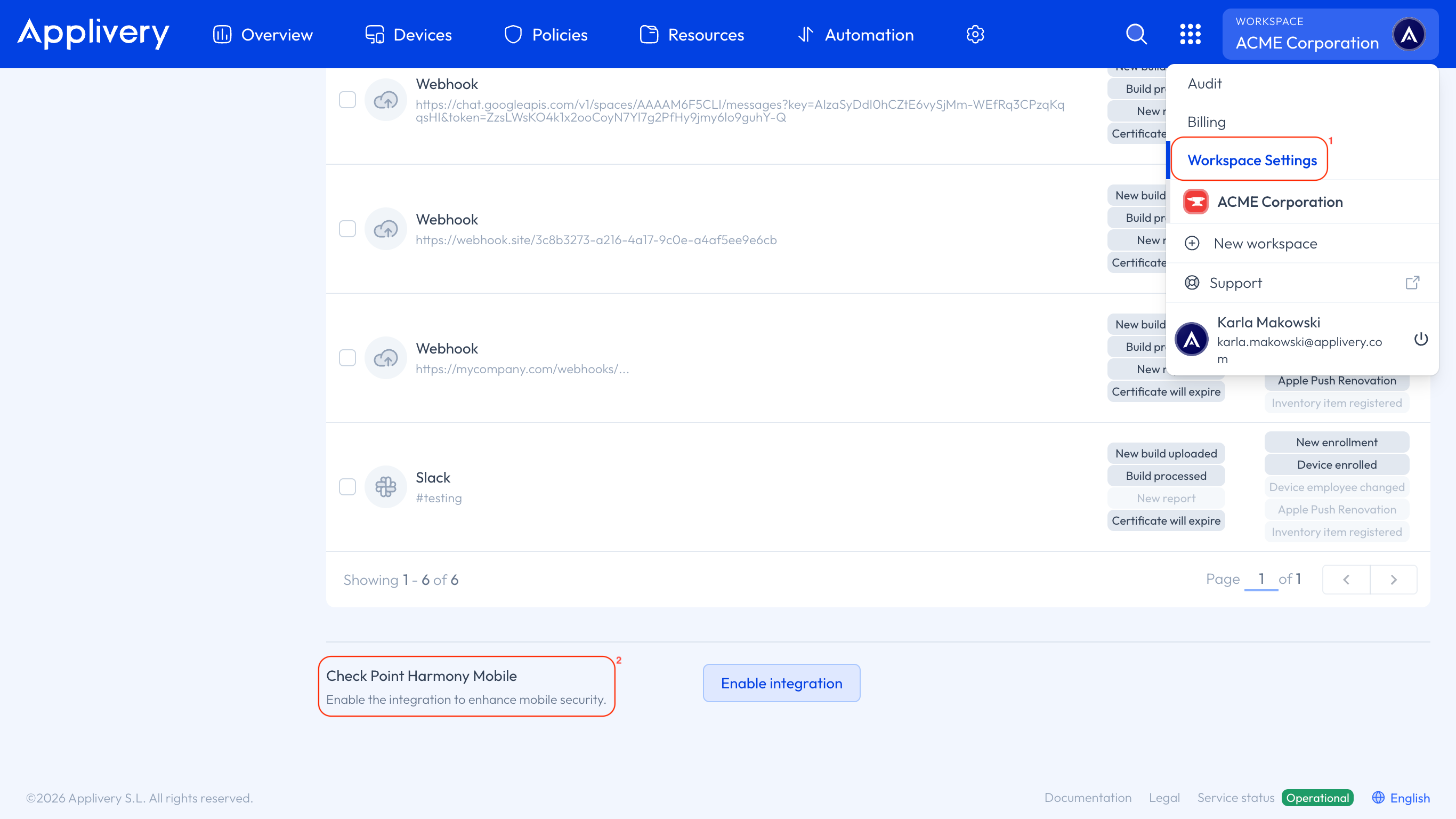
Once in the [**Applivery Dashboard**](https://dashboard.applivery.io/), go to your **Workspace Settings** 1 from the top dropdown menu, then open **Integrations** in the left-hand menu and enable **Check Point Harmony Mobile** 2.
To begin the integration, type or paste the **Portal Account ID** from the [Harmony Mobile Portal](https://portal.checkpoint.com/signin). You can find this by going to **Settings > General > Account ID**. Once you’ve entered it, click Next step.
Applivery will display all the information you need to enable the integration on the Harmony Mobile Portal.
## In the Harmony Mobile Portal
Go to **Settings**, select **Integrations** from the left-hand menu, and add a new integration (you can temporarily select Hexnode until Applivery appears as an option).
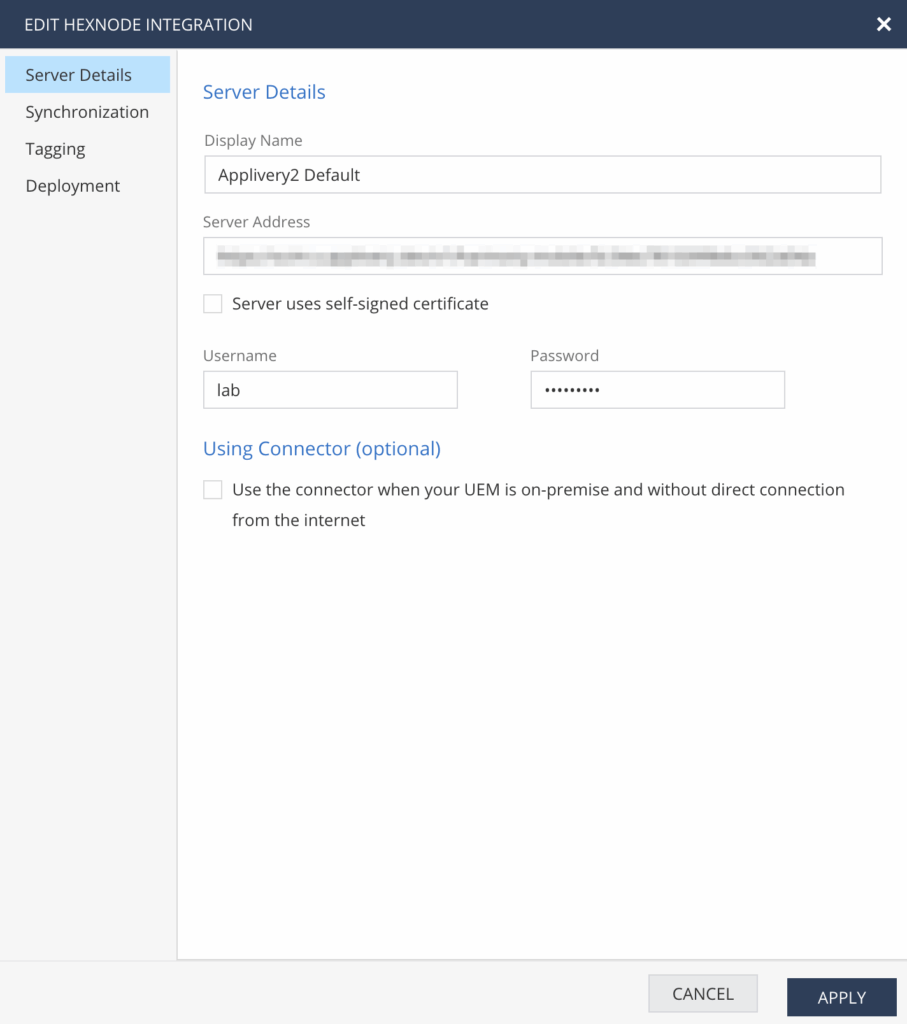
Alternatively, you can access it directly from [this link](https://portal.checkpoint.com/dashboard/mobile/harmonymobile#/settings/integrations). In the integration form, enter a **Display Name** of your choice, and fill in the **Server Address**, **Username**, and **Password** provided in your Applivery Dashboard.
Once done, click **Verify**, and after successful verification, click **Next** to continue.
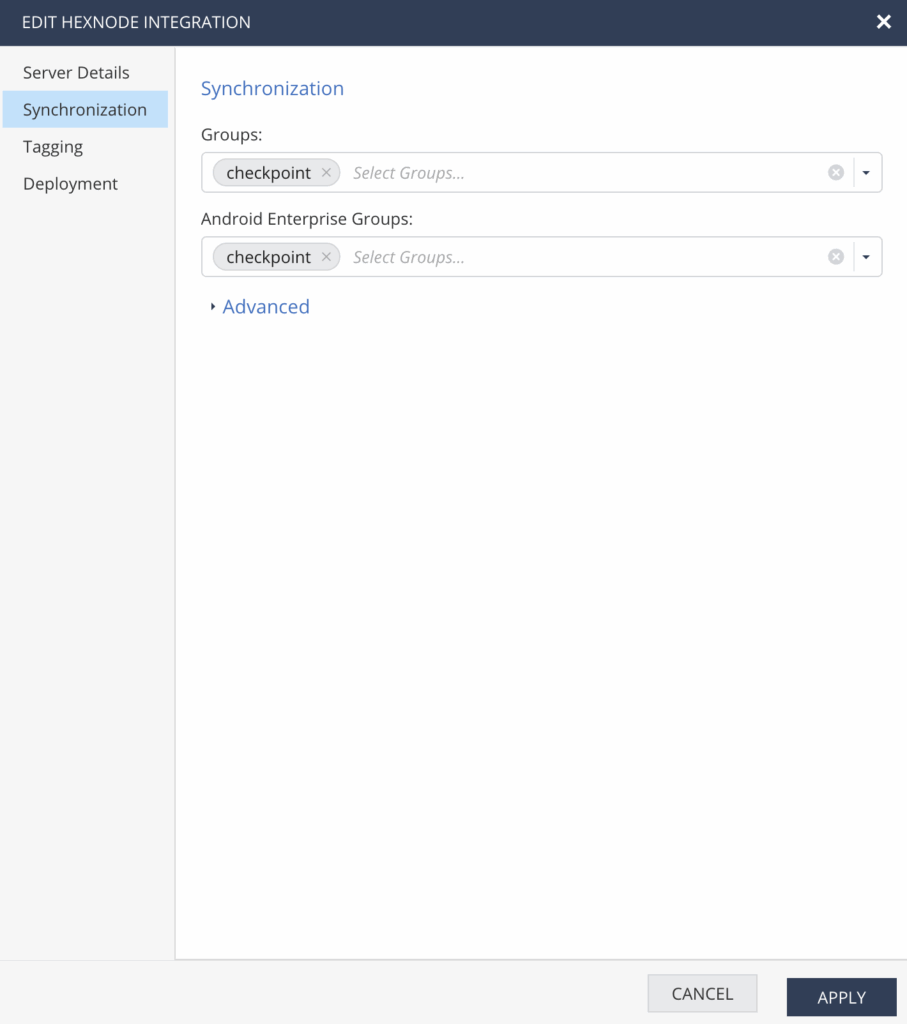
Once the groups finish loading, those associated with your Devices will be added automatically. Note that in Harmony Mobile, **groups correspond to tags** in Applivery, so **tags must be assigned to Devices in Applivery** for them to appear in the Harmony Mobile group list.
:::info
The Android Enterprise groups field in the UEM integration is used to manage and protect Android Devices that include both Work and Personal Profiles, allowing you to apply different Policies to each profile. This configuration is particularly useful when working with UEM solutions that support Android Enterprise. For more details, you can refer to the [Using Android Enterprise with Harmony Mobile](https://sc1.checkpoint.com/documents/Infinity_Portal/WebAdminGuides/EN/Harmony-Mobile-Integration-Guide/Topics-Integration-Guide/Citrix-Endpoint-Management/Using-Android-Enterprise-with-Harmony-Mobile.htm#_Ref40278689) guide.
:::
Next, copy the **token** provided in the final step of the integration and paste it into the corresponding field in the Applivery Dashboard.
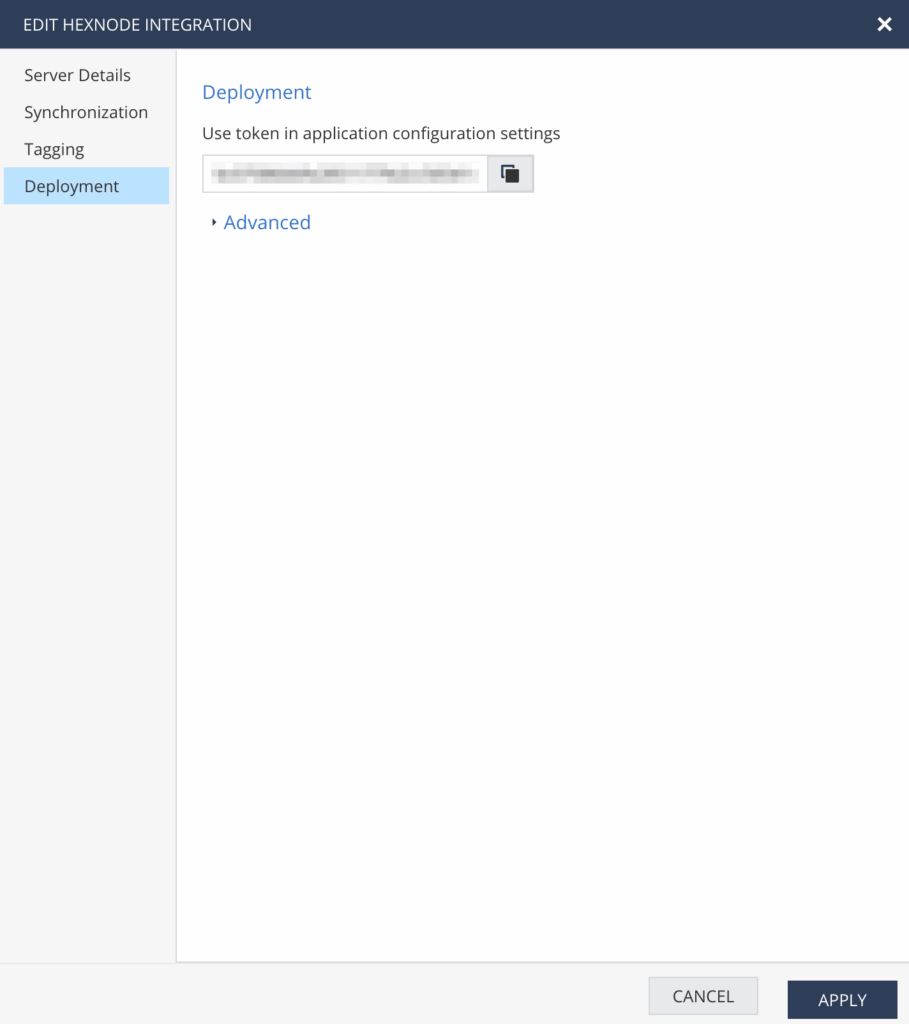
Once this is completed, your Devices will start appearing in the **Devices** section of the Harmony Mobile Portal. Keep in mind that until a Device is fully provisioned, its information may appear empty.
## Configuration for Android Devices
**Enable Check Point Harmony Mobile**
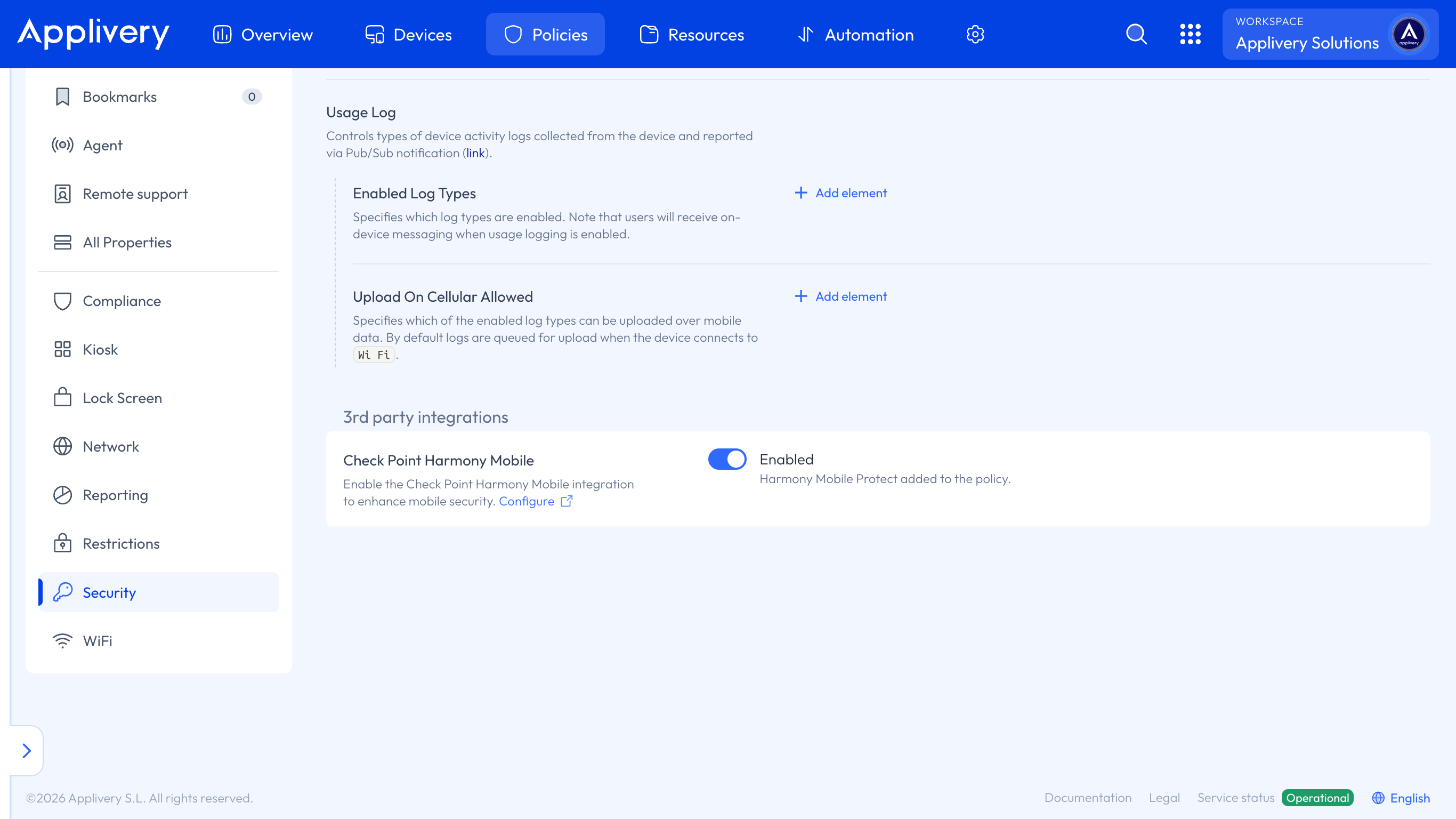
In the [**Applivery Dashboard**](https://dashboard.applivery.io/), go to any of your **Policies**. From the left side menu, open the **Security** section and enable **Check Point Harmony Mobile**.
**Configure Always On VPN**
For Check Point Harmony Mobile to work correctly, you need to configure Always On VPN using the Harmony Protect app’s package name. This ensures the VPN remains continuously active and all device traffic is protected at all times.
Within the policy, go to the **Network** section from the left-hand menu and locate the **Always On VPN** configuration. In the **Package Name** field, enter:
`com.lacoon.security.fox`
**Add the Harmony Mobile Protection app**
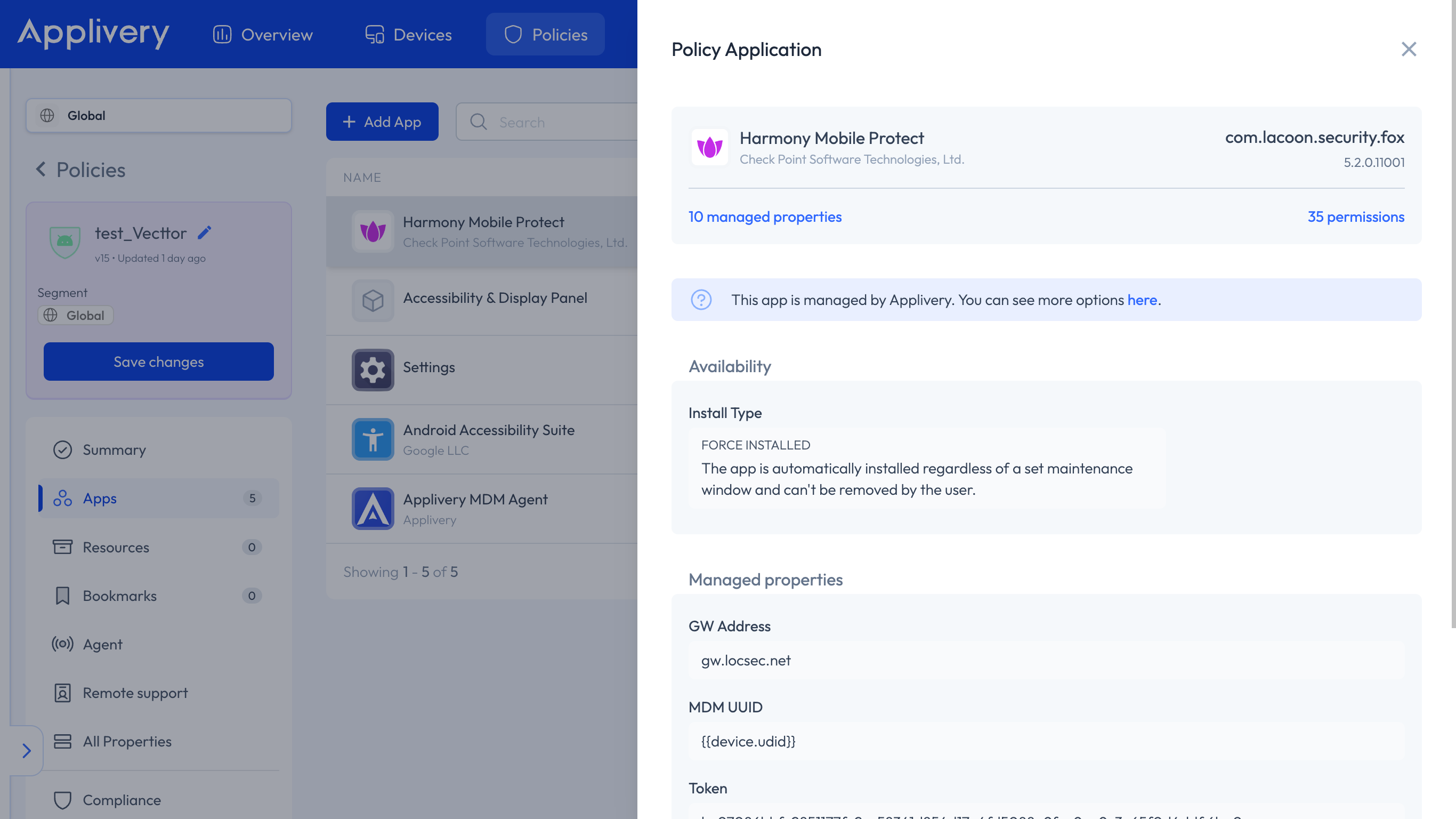
Go to the **Apps** section and click the **\+ Add App** button. Add the **Harmony Mobile Protection** app. Once selected, its managed properties will automatically appear:
- The **MDM UUID** (using interpolations, retrieved from the device’s network summary under UDID).
- The **GW Address** and **Infinity Portal Account ID** (both found in the Harmony Mobile Portal settings).
- The **Token**, which you’ll get from the last step of the integration, is usually added automatically.
**Complete setup on the device**
Open the app on the device and complete the setup process. Once the integration is active, any new alerts will appear in the portal as they occur.
## Configuration for Apple Devices
**Configure the VPN payload**
Once in the [**Applivery Dashboard**](https://dashboard.applivery.io/), go to any of your **Policies**. Click **\+ Add configuration**, select the **VPN** payload type, and configure the following fields:
Field
Value
User Defined Name
Check Point Local Tunnel
Account Username (under VPN)
{{device.serialNumber}}
Authentication Method (under VPN)
Certificate
Remote Address (under VPN)
www.checkpoint.com
VPN Subtype
com.checkpoint.capsuleprotect
Type
VPN
Vendor Config
{ "zero_touch": "true" }
Then **Enable VPN On Demand** (`1`) and add the following On Demand Rules:
On Demand Action
Interface Type Match
Connect
Wi-Fi
Connect
Cellular
Optionally, add a third rule with **Connect** + **Ethernet** to cover wired connections.
**Add the Harmony Mobile Protection app**
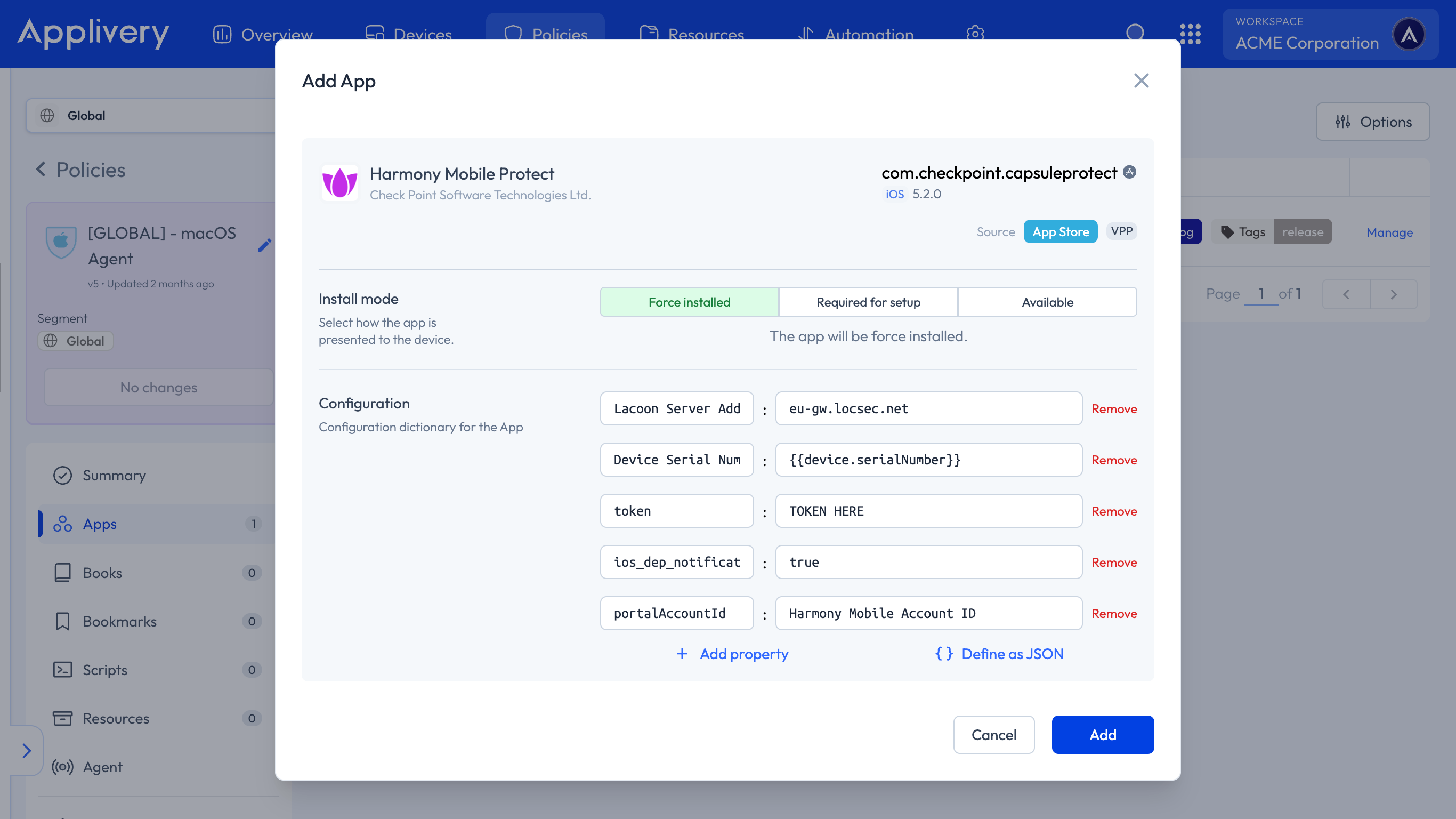
Add the **Harmony Mobile Protection** app to your Policy, ensuring you have enough [VPP licenses](https://docs.applivery.com/en/device-management/apple/app-management/vpp/) available. Configure the required parameters in the configuration field:
- `Lacoon Server Address`: `eu-gw.locsec.net`
- `Device Serial Number`: `{{device.serialNumber}}`
- `token`: Use your token here.
- `ios_dep_notification_permission`: `true`
- `portalAccountId`: Harmony Mobile Account ID.